Violations & compliance · 10/24/2026, 12:53 AM
Facade Project Needs the Neighbor's Property? Get an Access Agreement Early
Facade work often needs scaffolding, overhead protection or entry onto the building next door, which requires the neighbor's permission in an access agreement. Owners should alert neighbors early, start formal talks two or three months ahead, and expect to pay the neighbor's legal and engineering fees and possibly a license fee. If no deal is reached, a judge can set access terms and compensation.
 Reported by Habitat MagazineRead the original ↗

What happened
Habitat Magazine published a guide on October 24, 2026, in its November 2026 issue, on how New York City building owners can get an access agreement from a neighbor before a facade project. The issue comes up when work needs scaffolding, overhead protection or entry onto the building next door. Without the neighbor's permission, the article says, a project can stall before it starts.
The article advises telling the neighbor as soon as the building knows about the project, often a year or more ahead, and starting formal negotiations at least two or three months before construction. It says the neighbor generally must get 60 days' notice before work begins. The agreement should spell out where workers will enter, what equipment will be installed and for how long, how the neighbor's property will be protected and who pays. The neighbor's lawyer and engineer will likely review the site safety plan and insurance and may ask for a pre-construction survey. The article says most delays come from that review, not from neighbors seeking money.
On costs, the article says the neighbor should not pay for expenses the construction creates. The owner doing the work should expect to cover the neighbor's legal fees, engineering or architectural review fees, and possibly a license fee for temporary use of the property. Loss of use, such as scaffolding blocking a backyard or terrace all summer, is part of the negotiation.
If the neighbor stays silent or refuses, the owner's attorney can bring a proceeding under Real Property Actions and Proceedings Law Section 881. The article says a neighbor cannot block access that is reasonably necessary if the owner follows all codes, uses licensed professionals and carries adequate insurance. A judge sets the conditions, including compensation. The court route can take two or three months, which could cost the owner its construction window.
Key facts
- Outlet
- Habitat Magazine, November 2026 issue, posted October 24, 2026
- Law
- Real Property Actions and Proceedings Law Section 881
- Notice to neighbor
- Generally 60 days before work begins
- When to start negotiating
- At least two or three months before construction
- Court timeline
- An RPAPL 881 proceeding can take two or three months
- Costs owner may cover
- Neighbor's legal fees, engineering or architectural review fees, a possible license fee and loss-of-use compensation
- Finding the neighbor
- Owner address is in the deed of record; for an LLC, the New York Department of State lists its address for service
- Who decides if talks fail
- A judge sets access conditions, including compensation
What it means
Landlords
If you own a small building that needs facade work, raise access with the next-door owner early and budget for their lawyer, engineer and any license fee. If you are the neighbor, you can ask for a safety plan review, insurance details and a pre-construction survey, but a court can order reasonably necessary access.
Tenants and voucher holders
Tenants next to a facade job may lose use of a yard or terrace while scaffolding is up, and a ground-floor tenant may be asked for their landlord's contact information. The article treats loss of use as a matter negotiated between owners and does not address any compensation to tenants.
Buyers and owners
Co-op and condo boards planning facade work should build time for negotiation and a possible court case into the schedule. A stalled access deal can push a project past its planned construction window.
The highlights
- Neighbors generally must get 60 days' notice before work begins.
- If talks fail, owners can go to court under RPAPL Section 881.
- A court case can take two or three months and cost you your construction window.
Why it matters Landlords
NYC owners planning facade or exterior work can lose months if neighbor access is not secured well before construction starts.
What to do: Contact your neighbor about access as soon as a facade project is planned.
Not known yet
- How the 60-day notice must be delivered and what it must contain
- Typical license fee or loss-of-use amounts
- Whether tenants of the neighboring building have any say or receive any compensation
- How courts usually rule on specific conditions such as insurance limits or survey costs
Background
Many New York City facade projects follow periodic exterior wall inspections required by the Department of Buildings under its Facade Inspection and Safety Program. Repairs often bring sidewalk sheds, scaffolding and overhead protection, which can extend over or onto neighboring lots. When owners cannot agree on access, New York law lets the owner doing the work ask a court for a license to enter the neighbor's property on set terms.
Summary written by Bulwark from Habitat Magazine’s reporting. The original story is at habitatmag.com. This is general information, not legal advice.
Related
Follow Bulwark on WhatsApp
Deadline countdowns, rule changes, voucher rents and breaking NYC housing news in your WhatsApp Updates. Free.
Send the message that opens, then save our number. WhatsApp only shows updates from saved contacts.
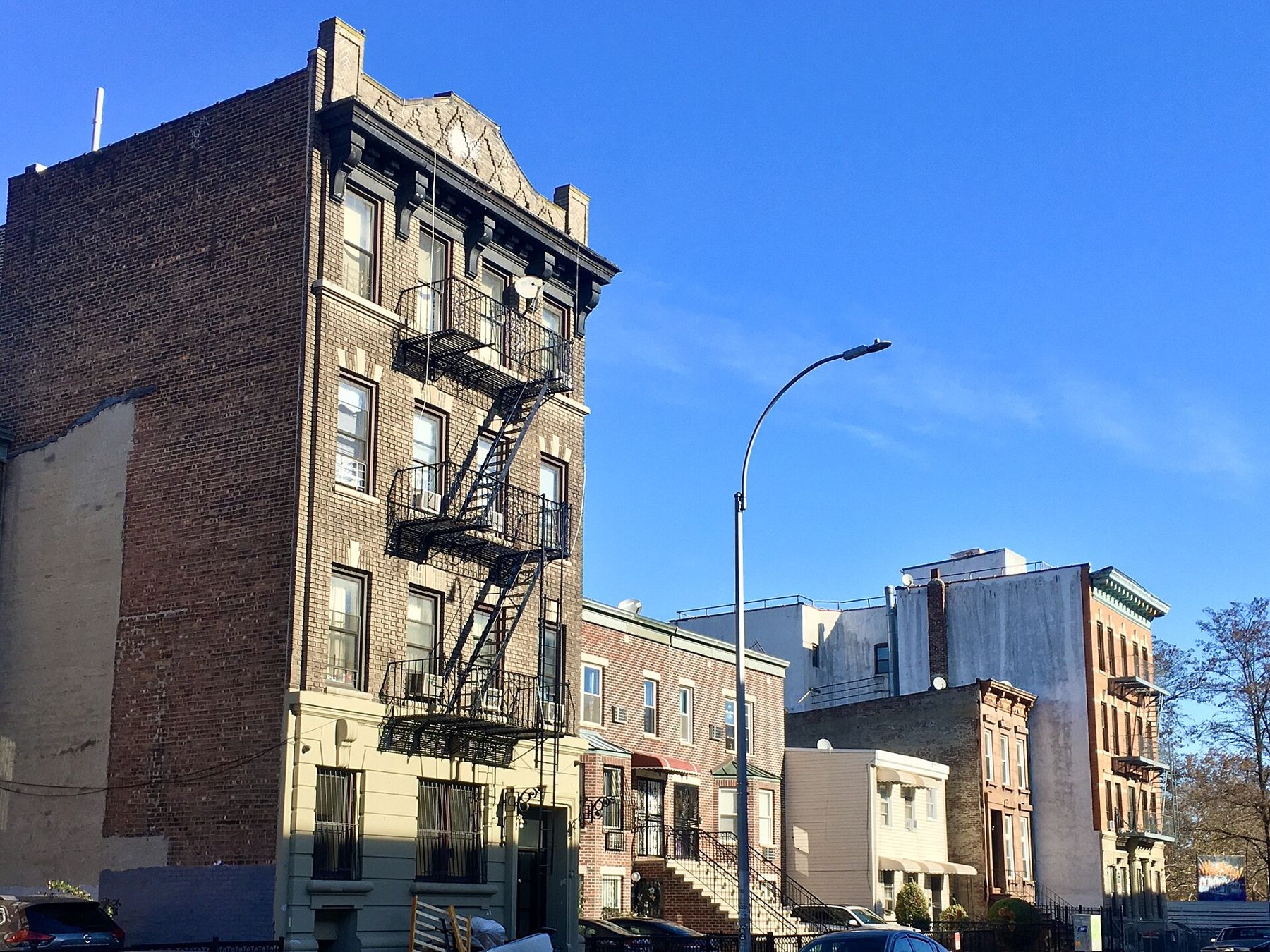
Brooklyn, NY
Does this touch your building?
Run a free violation report on any NYC address: HPD, DOB and OATH records, balances and hearing dates.
Photo: Andre Carrotflower, CC BY-SA 4.0