Permits & development · 10/21/2026
Chinatown Neighbors Sue to Halt Late-Night Work at Manhattan Jail Site
Chinatown residents and community groups filed suit in Manhattan Supreme Court to stop after-hours work on the 1,040-bed Manhattan jail at White and Centre Streets. They say noise, dust, vibration and floodlights are harming seniors and tenants nearby. The suit argues the work fails the legal test for extended hours and lacked new environmental review. City Hall says it will review the claims.
 Reported by CurbedRead the original ↗
What happened
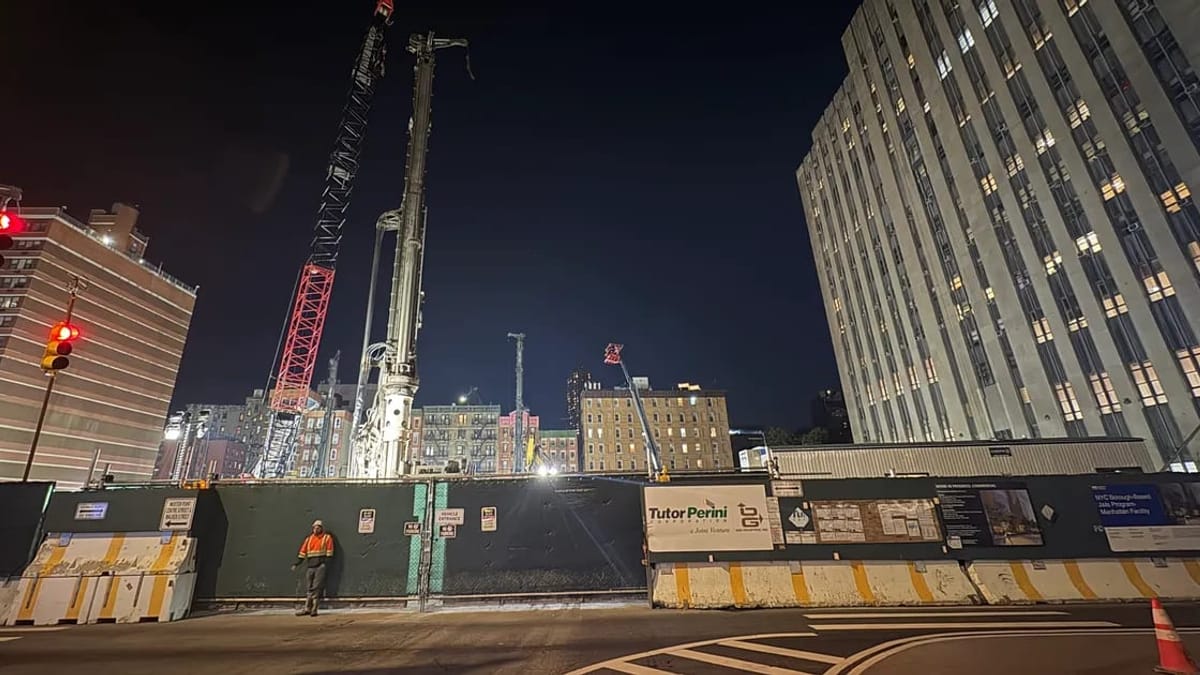
Neighbors of the future Manhattan jail in Chinatown filed a lawsuit in Manhattan Supreme Court on Wednesday to stop late-night construction at the site, Curbed reported on October 21, 2026. The jail is being built at White and Centre Streets, on the former site of the Manhattan Detention Complex, known as the Tombs. Plaintiffs include local residents, the nonprofit Welcome to Chinatown, and Neighbors United Below Canal, a group co-founded by Councilmember Christopher Marte. Some of these neighbors had already tried and failed in court to block the jail itself.
A city advisory published earlier this month says weekday work on White Street will run from at least 6 a.m. through midnight, with deliveries from 4 a.m. to 7 a.m. There will also be daytime work on Saturdays. The design-build team is Tutor Perini and O&G Industries. Curbed reported that the contractors installed dust and noise monitors and are using sound blankets and noise barriers.
Residents describe shaking ground, constant noise and floodlights at night. Jon Alpert, 77, who lives at 87 Lafayette Street, said in an affidavit that he can only sleep undisturbed from midnight to 4 a.m. Betty Lee, 77, and her husband live in a rent-stabilized apartment on Baxter Street. The complaint says they already could not open their windows and now face "essentially daylight conditions" in the evening. Ping Ai Mei, 88, lives at Chung Pak, the low-income senior facility next to the site. She says demolition dust has caused health issues and that she moved to a new unit in the building last year.
The suit argues that a jail does not meet the legal test for extended after-hours work, which it says is allowed only for certain projects, such as those in the interest of public health and safety. It also says the city violated state environmental law because the current plan is more than double the intensity and construction period studied in the environmental review. According to the suit, the city has said a mostly weekday, normal-hours schedule would push completion from 2032 to 2034 and add $340 million to the $3.9 billion estimated cost. Dana Kaplan, the city's "Close Rikers" lead, said the after-hours work keeps the project on the fastest possible timeline. A mayoral spokesperson said City Hall will review the claims.
Key facts
- Location
- White and Centre Streets, Chinatown, former site of the Manhattan Detention Complex (the Tombs)
- Project
- 1,040-bed, 335-foot-tall borough jail replacing part of Rikers Island
- Work hours
- Weekdays from at least 6 a.m. to midnight, deliveries 4 a.m. to 7 a.m., daytime Saturdays (per city advisory)
- Builders
- Tutor Perini and O&G Industries (design-build team)
- Court
- Manhattan Supreme Court, suit filed Wednesday per Curbed's October 21, 2026 report
- Target opening
- 2032; normal hours would mean 2034, per the suit
- Cost
- $3.9 billion estimated; normal hours would add $340 million, per the suit
- Rikers deadline
- Legal deadline to close Rikers is 2027; the city is expected to miss it
What it means
Landlords
Owners of buildings near White, Centre, Baxter and Lafayette Streets should expect tenant complaints about noise, vibration, dust and night lighting for years. The work is scheduled to run until the jail opens, targeted for 2032.
Tenants and voucher holders
Under the city advisory, people living near the site face work until midnight on weekdays and deliveries starting at 4 a.m., plus daytime Saturday work. Unless the court intervenes, this schedule is expected to continue.
Caseworkers
Older or ill clients near the site, including Chung Pak residents, may report sleep loss, dust-related health concerns or requests to change units. One Chung Pak resident has already moved within the building.
The highlights
- A city advisory sets weekday work from 6 a.m. to midnight, with deliveries from 4 a.m.
- The city says normal hours would push the 2032 opening to 2034 and add $340 million.
- The suit says the plan doubles the intensity reviewed in the environmental study.
Why it matters
Owners and tenants near large city projects may face years of night work, and this case tests when after-hours construction is allowed.
What to do: Keep a written log of construction noise, vibration and dust affecting your building.
Not known yet
- Whether the court will pause or limit the after-hours work, and when it might rule
- What permits or variances the city relied on to allow work until midnight
- Whether readings from the site's noise and dust monitors are made public
- Whether any relief is offered to nearby residents, such as window treatments or relocation help
Background
In New York City, construction is normally limited to weekday daytime hours. Work outside those hours generally requires an after-hours variance from the Department of Buildings, and contractors must also follow the city Noise Code, which the Department of Environmental Protection enforces. Residents can report construction noise or after-hours work through 311. Large public projects also go through environmental review, which studies expected noise, dust and traffic during construction.
Summary written by Bulwark from Curbed’s reporting. The original story is at curbed.com. This is general information, not legal advice.
Related
Follow Bulwark on WhatsApp
Deadline countdowns, rule changes, voucher rents and breaking NYC housing news in your WhatsApp Updates. Free.
Send the message that opens, then save our number. WhatsApp only shows updates from saved contacts.
Brooklyn, NY
Filing or fixing something on a building?
DOB permits, Certificates of Occupancy, FDNY, DEP and DOT filings, prepared and followed until approved.
Photo: Andre Carrotflower, CC BY-SA 4.0