Deals & development · 10/30/2026
Lawsuit: Two Trees Overcharged 421a Tenants at 300 Ashland Place
A class-action suit by Newman Ferrara and Housing Rights Initiative says Two Trees applied renewal increases to full legal rents instead of preferential rents at 300 Ashland Place, a 379-unit 421a building in Fort Greene. Two Trees said it is reviewing the suit. HCR declined to comment on ongoing litigation.
 Reported by GothamistRead the original ↗
What happened
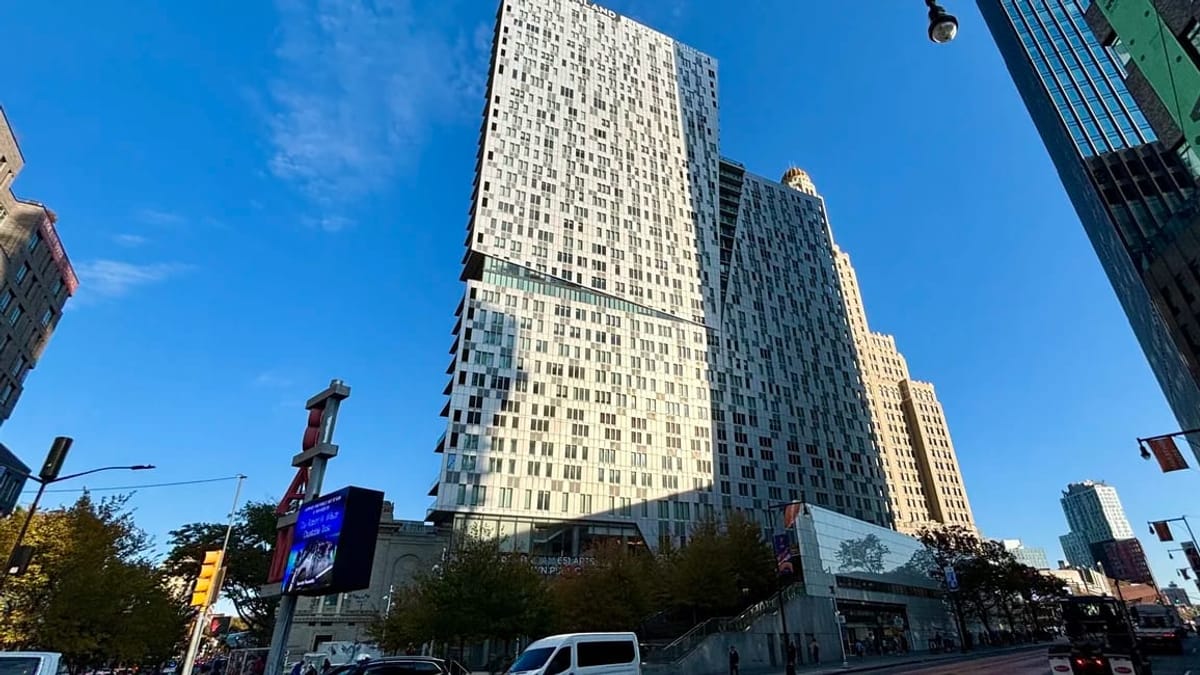
A new class-action lawsuit accuses Brooklyn developer Two Trees of illegally raising rents at 300 Ashland Place in Fort Greene, a building that receives the 421a property tax break. Gothamist reported the case on 10/30/2026 and said it was filed Friday. The law firm Newman Ferrara brought the suit in coordination with the nonprofit Housing Rights Initiative.
Under 421a, landlords must keep apartments rent-stabilized, even high-cost units, and follow state rules that cap renewal increases at a percentage set by the city's Rent Guidelines Board. The suit claims Two Trees applied renewal increases to the higher "legal rent" instead of the discounted "preferential rent" tenants first agreed to pay. The complaint cites a 20th-floor apartment and six other units. Housing Rights Initiative Executive Director Aaron Carr said the Rent Guidelines Board has not approved an increase above 3.25% since 2021. The lawsuit claims the practice raised rents by more than $30 million over five years.
Two Trees Managing Director David Lombino said the company was reviewing the lawsuit and declined further comment. A spokesperson for the state's housing agency, Homes and Community Renewal (HCR), declined to comment on ongoing litigation. Councilmember Crystal Hudson, whose district includes Fort Greene, criticized HCR for leaving enforcement to a nonprofit and a private law firm. Industry voices, including Seth Glasser of Marcus Millichap, called such claims technical "foot faults" with penalties out of proportion to the infraction.
The suit comes after this year's state budget extended the expired 421a program to cover a single Two Trees project, the 1,200-unit River Ring development on the Williamsburg waterfront, which will not be finished by the program's 2031 deadline.
Key facts
- Address
- 300 Ashland Place, Fort Greene, Brooklyn
- Units
- 379-unit complex, opened in 2016
- Rents
- Up to $7,455 for a recently leased two-bedroom. A 26th-floor one-bedroom was listed at $4,925 earlier in the month of the report
- Developer
- Two Trees, which says it owns and manages more than 4,000 apartments in a portfolio worth $4 billion
- Alleged overcharge
- More than $30 million over the past five years, according to the lawsuit
- Units in complaint
- A 20th-floor apartment plus six others
- Rent Guidelines Board cap
- No approved increase above 3.25% since 2021, per Housing Rights Initiative
- Agency
- Homes and Community Renewal (HCR), which declined to comment on the litigation
What it means
Landlords
Owners of 421a buildings should check whether renewal increases are calculated on the preferential rent tenants pay or on the higher legal rent. Overcharge suits over this issue have targeted several large landlords.
Tenants and voucher holders
Tenants in 421a buildings who signed at a discounted preferential rent can compare their renewal increases with Rent Guidelines Board percentages. A large jump at renewal may be worth questioning.
Caseworkers
Clients in newer market-looking buildings may still be rent-stabilized because of 421a. A rent history request can help show whether renewal increases followed the rules.
The highlights
- Suit says Two Trees raised rents by more than $30 million over five years.
- Increases hit the full legal rent, not the lower preferential rent tenants paid.
- Rent Guidelines Board has not approved a hike above 3.25% since 2021.
Why it matters Landlords
The suit argues 421a renewals must start from the preferential rent. Owners using the legal rent could face class-action overcharge claims.
What to do: Review how renewal increases are calculated on 421a units with preferential rents.
Not known yet
- How Two Trees will respond to the specific claims in court
- How many tenants at 300 Ashland Place could be part of the class
- Whether HCR will open its own review of the building
- When the court will first hear the case
Background
The 421a program gave new residential buildings a long-term property tax break in exchange for keeping apartments rent-stabilized. In stabilized units, the legal regulated rent can be higher than the preferential rent a tenant actually pays. Under the state's 2019 rent law, renewal increases for a sitting tenant with a preferential rent are generally calculated on the preferential rent, using the percentages set each year by the Rent Guidelines Board. Tenants can request their rent history from HCR and file overcharge complaints with the agency or in court.
Summary written by Bulwark from Gothamist’s reporting. The original story is at gothamist.com. This is general information, not legal advice.
Related
Follow Bulwark on WhatsApp
Deadline countdowns, rule changes, voucher rents and breaking NYC housing news in your WhatsApp Updates. Free.
Send the message that opens, then save our number. WhatsApp only shows updates from saved contacts.
Brooklyn, NY
Want a manager who tracks this for you?
Rent, repairs, filings and deadlines handled, with one clear statement a month.
Photo: Andre Carrotflower, CC BY-SA 4.0