Manhattan · Upper West Side
315 West End Avenue, Upper West Side, Manhattan: Violations and Building Information
This building has open records with New York City agencies. The full report, with every item, is sent to you by email as a PDF.
The full report, by email
Every open item on 315 West End Avenue, with dates, hearing dates, penalties and status, plus the closed history. The report is never shown on this website; it is sent to the email you enter.
- HPD, DOB, ECB/OATH, FDNY, DEP, Sanitation and Health records
- Source dataset beside each figure
- Free; we never sell your details
About 315 West End Avenue
315 West End Avenue is an elevator co-op in Upper West Side, Manhattan, built in 1948, with 24 apartments, on 8 floors. The lot is 4,984 sq ft, zoned R10A.
- Building type
- Elevator co-op (class D4)
- Year built
- 1948
- Apartments
- 24
- Floors
- 8
- Building floor area
- 33,880 sq ft
- Lot area
- 4,984 sq ft
- Zoning
- R10A
- Floor area ratio
- 6.80 built of 10.00 allowed
- Historic district
- West End-Collegiate Historic District Extension
- Programmes and lists
- Co-op · Sidewalk shed / scaffold up · LL97: emission limits from 2024 · LL88 lighting
- BBL
- 1011840083
Zoning allows more floor area than the building uses: roughly 15,949 sq ft of unused development rights on paper. Zoning bonuses, overlays and lot conditions change the real number; an architect should confirm it.
From the city’s tax-lot records (DCP PLUTO), DOF, HPD, DOB and HUD programme lists. Zoning map for this lot.
NYC rules that apply here
Based on the building’s size, age and type. These apply whether or not anything is open.
- Sidewalk shed / scaffold upAn active DOB NOW permit for a sidewalk shed, scaffold or construction fence. A shed is a monthly rental cost, and one that stays up for years usually means facade repairs are stalled. The permit has to be renewed while the shed stands; an expired shed permit is a violation.
- LL97: emission limits from 2024On DOB’s Local Law 97 list under Article 320: emission limits since January 1, 2024, report every May 1.
- LL88 lightingOn DOB’s Local Law 88 list: lighting in non-residential and common spaces had to meet code by January 1, 2025 (and tenant submeters in the largest buildings), with a report to DOB.
- HPD registration every yearRequired for every residential building with 3 or more apartments, between May 21 and September 1. Without it, an owner cannot bring a nonpayment case or certify corrected violations. Read the guide
- Lead-paint rules (Local Law 1)Built before 1960, so paint in the apartments is presumed to be lead-based: annual notices, turnover work, XRF testing and ten years of records. Read the guide
- Annual window-guard noticeEach January every tenant gets the window-guard notice; guards go on every window of an apartment where a child 10 or younger lives. Read the guide
- Heat and hot waterHeat season runs October 1 to May 31 (68°F by day when it is below 55°F outside, 62°F at night); hot water at 120°F all year. Read the guide
- Gas piping inspection every four years (Local Law 152)Every building except one- and two-family homes; the year depends on the community district. Read the guide
- Natural gas alarms by January 1, 2027Every apartment in a building with gas service needs a natural gas alarm (Local Law 157 of 2016, deadline set by Local Law 102 of 2025). Read the guide
- Façade inspection every five years (FISP / Local Law 11)Taller than six stories, so a qualified inspector must examine the exterior walls every five years and file with DOB. Read the guide
- Energy benchmarking and Local Law 97About 33,880 sq ft, over the 25,000 sq ft line: Local Law 84 benchmarking and the Local Law 97 emissions report are due May 1 if the building is on the covered list. Read the guide
- In a historic districtWest End-Collegiate Historic District Extension: exterior work needs a permit from the Landmarks Preservation Commission.
How NYC violations are cleared
HPD violations
Housing code violations in three classes: C (immediately hazardous, such as no heat or lead paint), B (hazardous) and A (non-hazardous). Each is closed by correcting the condition and certifying the correction to HPD within its deadline.
HPD violation classes and how to clear themDOB violations and ECB summonses
Building code items such as boilers, elevators, gas piping and facades. DOB violations block permits and Certificates of Occupancy until dismissed; ECB summonses also carry a hearing and a penalty.
How to remove a DOB violationOther OATH summonses
Sanitation, environmental, health and fire-code summonses are heard at OATH. Each has a hearing date, and a missed hearing becomes a default at the maximum penalty.
OATH / ECB hearing guideWant it handled? Manhattan violation removal · HPD violation removal · DOB and ECB violation removal · Property management in Upper West Side
Source: NYC Open Data, compiled by Bulwark and last refreshed 10/24/2026. Records can lag the agencies’ own systems by a day or more. Owner and registration contact details are not shown on this page.
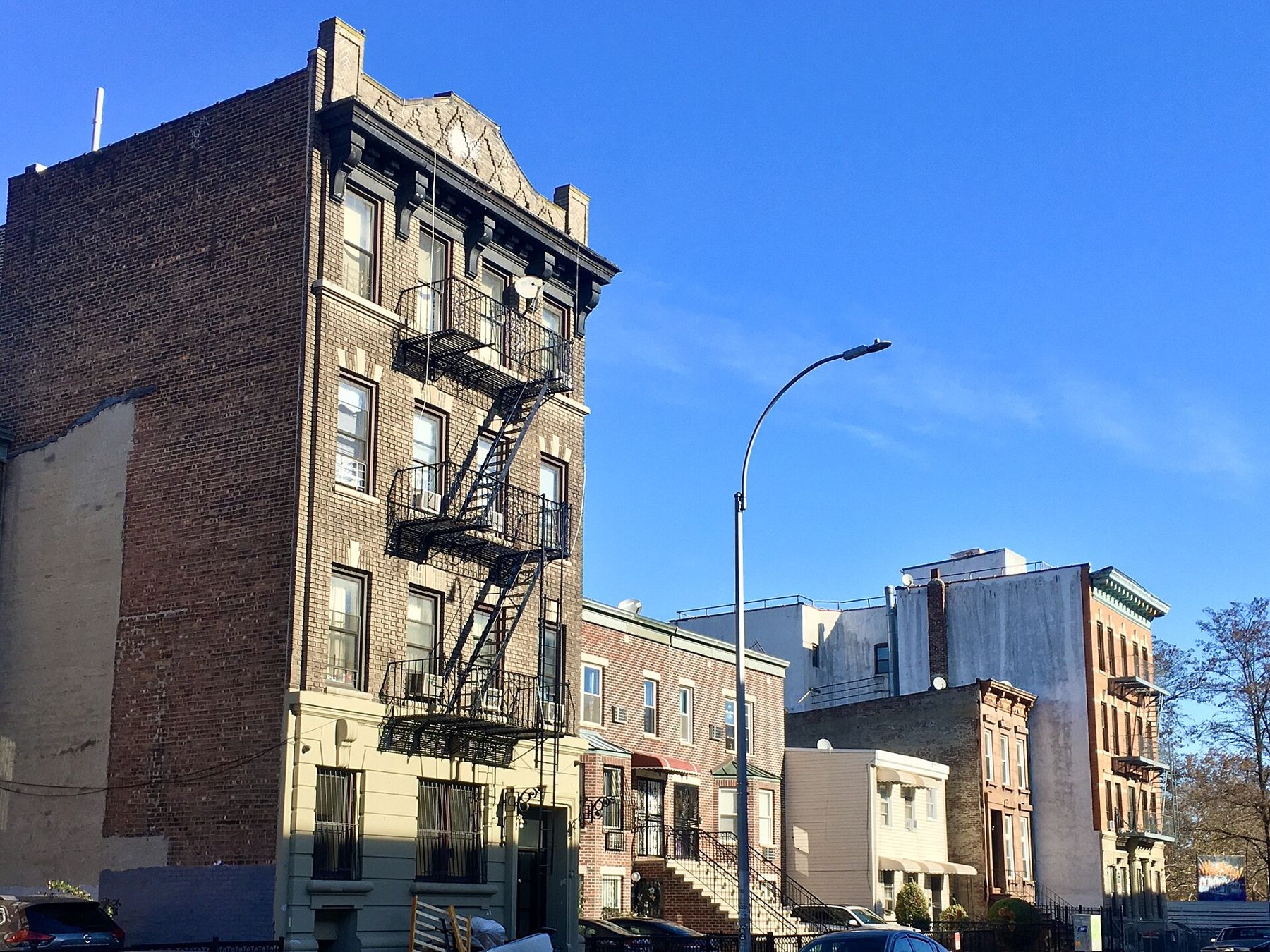
Brooklyn, NY
Own or manage this building? We can clear the open items
Call (888) 756-7874 or get the free full report by email. Then we quote a fixed price for the clearance.
Photo: Andre Carrotflower, CC BY-SA 4.0